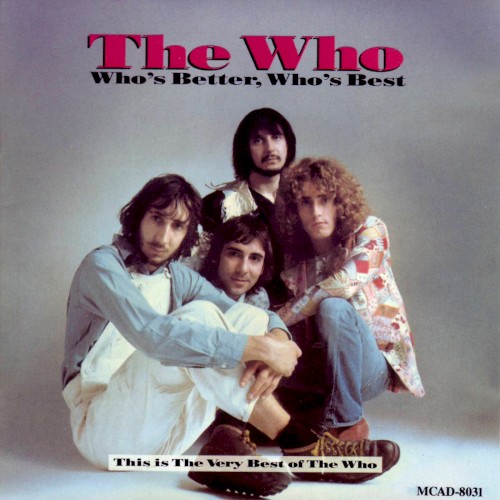
Album Information Section
Album Title: Who’s Better, Who’s Best
Artist: The Who
Original Release Date: November 14, 1988
Label: MCA Records
Genres: Rock, Pop Rock, Mod
Track Listing:
- 1. My Generation (3:16)
- 2. Anyway, Anyhow, Anywhere (2:39)
- 3. The Kids Are Alright (2:46)
- 4. Substitute (3:47)
- 5. I’m a Boy (2:39)
- 6. Happy Jack (2:12)
- 7. Pictures of Lily (2:42)
- 8. I Can See for Miles (4:07)
- 9. Who Are You (5:03)
- 10. Won’t Get Fooled Again (edit) (3:38)
- 11. Magic Bus (3:20)
- 12. I Can’t Explain (2:05)
- 13. Pinball Wizard (3:00)
- 14. I’m Free (2:41)
- 15. See Me, Feel Me (3:31)
- 16. Squeeze Box (2:40)
- 17. Join Together (4:19)
- 18. You Better, You Bet (5:37)
- 19. Baba O’Riley (5:00)
Recording Information
“Who’s Better, Who’s Best” was compiled from various sessions and recordings that spanned the band’s career, showcasing their evolution from the early 1960s through the late 1970s. The most notable studios used for recording the tracks include IBC Studios and Olympic Studios, both located in London. The recording sessions for the tracks took place over several years, reflecting the band’s prolific output during their peak years.
The album was produced by the legendary team of Kit Lambert and Chris Stamp, who were instrumental in shaping The Who’s sound in their early years. The engineering was primarily handled by renowned sound engineer Glyn Johns, known for his innovative approaches to recording. Notable recording techniques included the use of multi-track recording and the application of compression and equalization to capture the raw energy of the band.
Interestingly, the compilation gathered tracks that not only highlighted the band’s hits but also included lesser-known singles, providing a more comprehensive overview of their musical journey. The decision to release this compilation was made as a celebration of the band’s legacy, particularly following the passing of drummer Keith Moon in 1978 and the subsequent changes in the band’s lineup.
Band Context
At the time of the album’s release in late 1988, The Who was in a transitional phase. The band had seen significant changes in its lineup, most notably with the loss of Keith Moon, whose death had a profound impact on the remaining members. The surviving members—Roger Daltrey, Pete Townshend, and John Entwistle—continued to perform and record, navigating the complexities of their legacy and the evolving music landscape.
During the late 1980s, The Who had re-emerged in the public eye, partly due to nostalgia for classic rock and partly because of their participation in various benefit concerts. “Who’s Better, Who’s Best” served as a reminder of their contributions to rock music, highlighting their influential role in the mod movement and rock culture. The album not only compiled their greatest hits but also welcomed a new generation of fans who may have been unfamiliar with their earlier work.
Track Commentary
The album opens with the iconic “My Generation,” a declaration of youthful rebellion that defined the spirit of the 1960s. This track is immediately followed by “Anyway, Anyhow, Anywhere,” showcasing The Who’s penchant for energetic rock combined with introspective lyrics. “The Kids Are Alright” serves as a nostalgic anthem reflecting on youth, while “Substitute” provides a satirical take on identity and societal expectations.
Other standout tracks include “I Can See for Miles,” known for its complex arrangement and powerful vocals, and “Who Are You,” a later classic that showcases the band’s evolution into more mature themes. “Won’t Get Fooled Again,” with its revolutionary spirit, remains a staple in rock history, while “Baba O’Riley,” often referred to as “Teenage Wasteland,” is renowned for its innovative use of synthesizers and its anthem-like quality.
The critical reception of “Who’s Better, Who’s Best” was generally positive, with many reviewers praising its comprehensive nature and the quality of the tracks selected. The album solidified The Who’s legacy as one of the most influential rock bands in history, bridging the gap between the past and the present, and ensuring their sound continued to resonate with audiences. This compilation not only celebrated their achievements but also set the stage for future generations to discover The Who’s remarkable catalog.