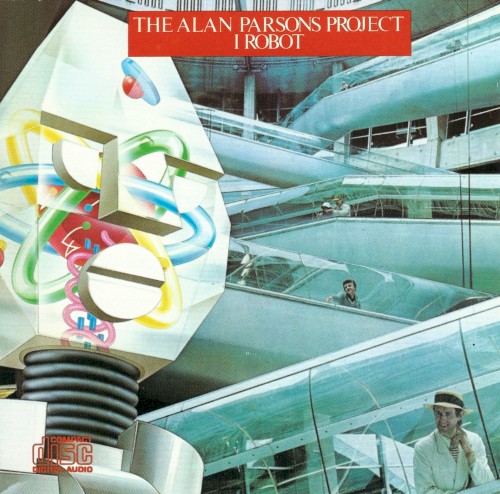
Album Information Section
Album Title: I Robot
Artist: The Alan Parsons Project
Original Release Date: June 1, 1977
Label: Unknown Label
Genres: Progressive Rock, Art Rock
Track Listing:
- 1. I Robot (6:01)
- 2. I Wouldn’t Want to Be Like You (3:23)
- 3. Some Other Time (4:05)
- 4. Breakdown (3:53)
- 5. Don’t Let It Show (4:25)
- 6. The Voice (5:24)
- 7. Nucleus (3:22)
- 8. Day After Day (The Show Must Go On) (3:57)
- 9. Total Eclipse (3:13)
- 10. Genesis Ch. 1 V. 32 (3:25)
Recording Information
The album “I Robot” was primarily recorded at Abbey Road Studios in London, a place renowned for its association with The Beatles and various other iconic artists. The recording sessions took place primarily in 1976, a period marked by the innovative soundscapes that The Alan Parsons Project was beginning to establish.
The production was spearheaded by Alan Parsons and Eric Woolfson, both of whom were integral to the creative vision behind the album. Parsons, who previously worked as an engineer on The Beatles’ “Abbey Road” and Pink Floyd’s “The Dark Side of the Moon,” brought a wealth of technical expertise to the project. The engineering duties were also handled by Parsons, allowing for a cohesive sonic identity throughout the album.
Notably, “I Robot” employed advanced recording techniques for its time, including the use of synthesizers and multi-track recording. The album features a blend of orchestral arrangements and electronic instrumentation, showcasing the group’s penchant for marrying rock with progressive elements. An interesting production note is the use of the vocoder on “The Voice,” which added a distinctive quality to the track, enhancing its futuristic theme.
Band Context
At the time of the album’s release, The Alan Parsons Project was transitioning into a prominent fixture in the progressive rock scene. Formed in 1975, the band was initially a studio project by Alan Parsons and Eric Woolfson, both of whom sought to merge rock with orchestral and electronic influences. Prior to “I Robot,” their debut album “Tales of Mystery and Imagination” (1976) had already established their reputation for ambitious concepts and high production values.
The lineup during the recording of “I Robot” primarily consisted of Parsons, Woolfson, and a host of session musicians. Notable contributors included guitarist Ian Bairnson, bassist David Paton, and drummer Stuart Elliott. This album marked a significant evolution in their sound, as they began to incorporate more commercial elements while maintaining their artistic integrity.
Leading up to this release, the band experienced rapid growth in popularity, largely driven by the success of their debut. However, “I Robot” also came at a time of increased industry competition, compelling the group to innovate further. This pressure would lay the groundwork for a series of successful albums throughout the late 1970s and early 1980s.
Track Commentary
The album opens with the title track “I Robot,” which sets the tone for the themes of technology and the human condition that permeate the album. Its blend of rock and electronic elements creates a sound that is both timeless and forward-thinking. “I Wouldn’t Want to Be Like You” stands out as one of the album’s singles, showcasing a catchy chorus paired with a biting commentary on conformity and the mechanization of society.
Tracks like “Breakdown” and “Don’t Let It Show” further explore personal and emotional themes, juxtaposed against the album’s overarching concept of a dystopian future. “The Voice,” another highlight, features a haunting melody coupled with the use of the vocoder, enhancing its lyrical exploration of communication and isolation.
Instrumental tracks such as “Nucleus” allow for a moment of reflection amidst the lyrical narratives, showcasing the band’s ability to create mood through sound alone. The closing track, “Genesis Ch. 1 V. 32,” encapsulates the album’s exploration of creation and existence, leaving listeners with a thought-provoking conclusion.
Upon its release, “I Robot” received critical acclaim and has since been recognized as a landmark album in the progressive rock genre. The combination of innovative production, conceptual depth, and memorable melodies has ensured its lasting legacy, influencing countless artists and continuing to resonate with listeners to this day.