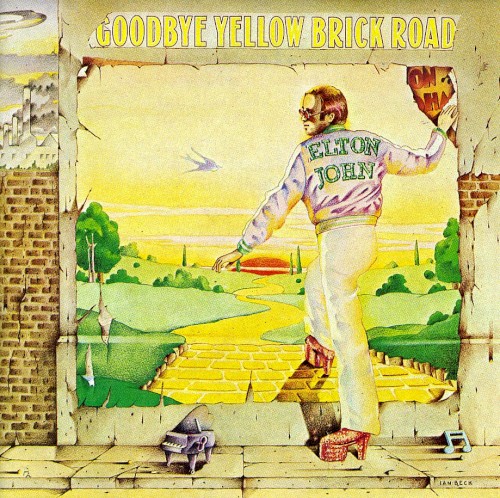
Album Information Section
Album Title: Goodbye Yellow Brick Road
Artist: Elton John
Original Release Date: 1973-10-05
Label: MCA Records
Genres: Rock, Pop
Track Listing:
- 1. Funeral for a Friend / Love Lies Bleeding (11:07)
- 2. Candle in the Wind (3:49)
- 3. Bennie and the Jets (5:23)
- 4. Goodbye Yellow Brick Road (3:14)
- 5. This Song Has No Title (2:23)
- 6. Grey Seal (4:00)
- 7. Jamaica Jerk‐Off (3:39)
- 8. I’ve Seen That Movie Too (5:58)
- 9. Sweet Painted Lady (3:55)
- 10. The Ballad of Danny Bailey (1909–34) (4:24)
- 11. Dirty Little Girl (5:01)
- 12. All the Girls Love Alice (5:09)
- 13. Your Sister Can’t Twist (but She Can Rock ’n Roll) (2:42)
- 14. Saturday Night’s Alright for Fighting (4:56)
- 15. Roy Rogers (4:08)
- 16. Social Disease (3:43)
- 17. Harmony (2:46)
Recording Information
“Goodbye Yellow Brick Road” was recorded primarily at the Château d’Hérouville, a scenic estate in France known for its luxurious surroundings and high-quality recording facilities. The recording sessions took place during the year 1973, with the exact dates spanning several months as Elton John and his band crafted the album. The production was helmed by Gus Dudgeon, a significant figure in Elton John’s early career, known for his innovative approaches to sound. The engineering was managed by David Hentschel, who utilized advanced recording techniques for the time, including multi-track recording and orchestral arrangements that added depth to the album’s sound.
One notable aspect of the production process was the collaborative effort between John and lyricist Bernie Taupin, who created a narrative-rich soundscape that resonated with audiences. The story behind “Candle in the Wind,” which became one of John’s most iconic songs, was particularly influenced by the tragic life of Marilyn Monroe, showcasing the duo’s ability to intertwine personal and cultural themes in their work.
Band Context
At the time of the release of “Goodbye Yellow Brick Road,” Elton John was solidifying his status as one of the preeminent pop artists of the 1970s. Following the success of his previous albums, including “Honky Château” and “Don’t Shoot Me I’m Only the Piano Player,” John was charting new territory in both musical experimentation and commercial appeal. The lineup during this period included long-time collaborators such as guitarist Davey Johnstone, bassist Dee Murray, and drummer Nigel Olsson, who were integral to the album’s distinctive sound.
Leading up to this album, Elton John’s career was marked by rapid growth and increasing fame, with a series of hit singles that captured the public’s imagination. The summer of 1973 saw him at the height of his popularity, and with “Goodbye Yellow Brick Road,” he sought to push artistic boundaries while maintaining his commercial success. This album is often seen as a turning point for John, as it encapsulated his artistic vision while also reflecting the changing landscape of rock music.
Track Commentary
The album opens with the sweeping “Funeral for a Friend / Love Lies Bleeding,” a track that brilliantly showcases John’s piano skills and orchestral arrangements. This powerful opener sets the tone for the album, blending rock with classical influences. “Candle in the Wind,” perhaps the most famous track, is a poignant tribute that resonates with listeners for its emotional depth and storytelling. Its success was further amplified when it was re-released in 1997 as a tribute to Princess Diana.
“Bennie and the Jets” stands out with its futuristic sound and satirical lyrics about the music industry, while the title track “Goodbye Yellow Brick Road” offers a reflective take on fame and success, embodying themes of escapism and nostalgia. Other notable songs like “Saturday Night’s Alright for Fighting” capture the youthful exuberance of the era, blending rock with a sense of rebellion.
Overall, “Goodbye Yellow Brick Road” received critical acclaim upon release, with many reviewers praising its ambitious production and lyrical depth. The album solidified Elton John’s position in music history, with tracks that continue to influence artists and resonate with audiences decades later. Its legacy is not just in the numbers, but in the emotional connections it fosters, marking it as a seminal work in the annals of popular music.