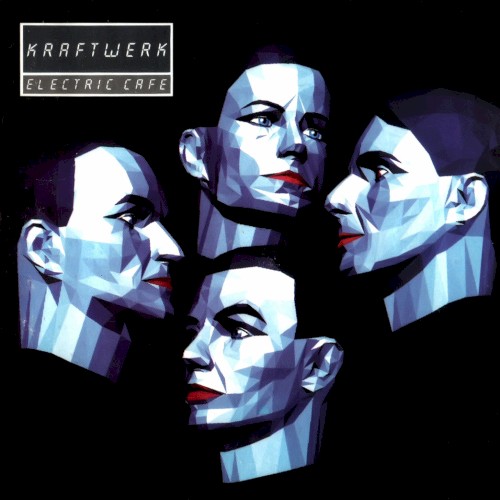
Album Information Section
Album Title: Electric Cafe
Artist: Kraftwerk
Original Release Date: November 3, 1986
Label: EMI United Kingdom
Genres: Electronic, Synth-pop
Track Listing:
- 1. Boing Boom Tschak (2:58)
- 2. Techno Pop (7:42)
- 3. Musique Non Stop (5:46)
- 4. The Telephone Call (8:04)
- 5. Sex Object (6:52)
- 6. Electric Cafe (4:16)
Recording Information
“Electric Cafe” was recorded at the Kling Klang Studio in Düsseldorf, Germany, which served as Kraftwerk’s primary creative hub. The recording sessions took place between 1985 and 1986, marking a significant period for the band as they refined their sound and approach to music production.
The album was produced by Kraftwerk members Ralf Hütter and Florian Schneider, who also took on engineering roles. The duo was known for their innovative use of technology in music, and “Electric Cafe” saw them incorporate cutting-edge synthesizers and drum machines, including the Yamaha DX7 and Roland TR-808, which were pivotal in shaping the sound of the album.
Notably, “Electric Cafe” was one of the first albums to feature extensive use of digital sampling, a technique that would become a hallmark of electronic music in the years to come. The production incorporated various field recordings and vocal samples, adding layers of complexity to the music. An interesting anecdote from the sessions includes the band experimenting with sound manipulation and effects, which contributed to the album’s distinct sonic character.
Band Context
By the mid-1980s, Kraftwerk had already established themselves as pioneers of electronic music, having influenced countless artists and genres. The band’s previous album, “Computer World,” released in 1981, had solidified their status in the music industry. However, following a period of relative silence, “Electric Cafe” marked their return after a five-year hiatus.
During this time, the lineup remained consistent, featuring Ralf Hütter, Florian Schneider, Karl Bartos, and Wolfgang Flür. However, tensions within the group were palpable, leading to a shift in dynamics. Bartos and Flür would eventually leave the band shortly after the album’s release, which would significantly affect Kraftwerk’s future direction.
The band was also navigating the changing landscape of music in the 1980s, a time when synthesizers were becoming increasingly popular across various genres. “Electric Cafe” was an attempt to bridge the gap between their established sound and the emerging trends in electronic dance music, a reflection of the evolving musical environment.
Track Commentary
The opening track, “Boing Boom Tschak,” is a rhythmic exploration that sets the tone for the album with its catchy hooks and repetitive beats, encapsulating the essence of Kraftwerk’s minimalist style. “Techno Pop,” arguably one of the standout tracks, showcases the band’s ability to blend melody with technological innovation, creating an engaging listening experience that resonated well with fans and critics alike.
“Musique Non Stop” serves as a highlight, featuring a repeating vocal sample that emphasizes the album’s themes of technology and modernity. The track received significant acclaim and became a fan favorite, often cited in reviews as a quintessential Kraftwerk piece.
Other tracks like “Sex Object” and the title track “Electric Cafe” continue to explore the themes of desire and modernity, with the latter functioning as a fitting conclusion to the album’s exploration of contemporary life through a technological lens. Critical reception of “Electric Cafe” was mixed upon its release, with some praising its innovative sound while others felt it lacked the groundbreaking impact of earlier works. Over time, however, it has gained recognition as a significant entry in Kraftwerk’s discography, influencing the electronic genres that followed.