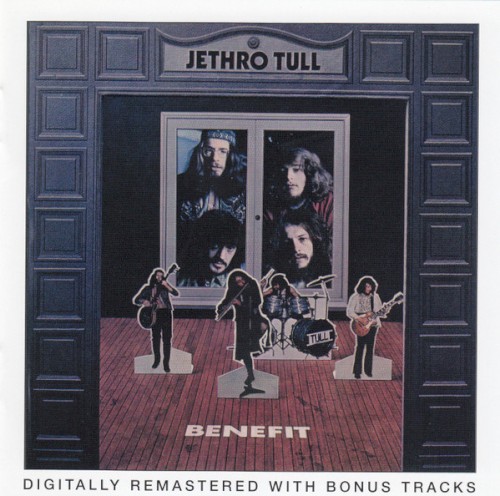
Album Information Section
Album Title: Benefit
Artist: Jethro Tull
Original Release Date: April 20, 1970
Label: Unknown Label
Track Listing:
- 1. With You There to Help Me (6:19)
- 2. Nothing to Say (5:14)
- 3. Alive and Well and Living In (2:49)
- 4. Son (2:51)
- 5. For Michael Collins, Jeffrey and Me (3:52)
- 6. To Cry You a Song (6:16)
- 7. A Time for Everything? (2:44)
- 8. Inside (3:50)
- 9. Play in Time (3:50)
- 10. Sossity; You’re a Woman (4:43)
- 11. Singing All Day (3:07)
- 12. Witch’s Promise (3:52)
- 13. Just Trying to Be (1:38)
- 14. Teacher (original UK mix) (3:49)
Recording Information
“Benefit” was recorded at Olympic Studios, located in London, England, a venue renowned for its state-of-the-art facilities and a rich history of notable recordings. The album sessions took place in early 1970, around February and March. The band was produced by the legendary Terry Ellis, who had previously worked with the group on their earlier albums, ensuring a continuity in sound and production quality. The engineering duties were handled by Robin Black, who was known for his innovative techniques at the time.
During the recording of “Benefit,” the band utilized a mix of traditional and modern recording equipment, allowing for a distinctive sound that blended acoustic and electric elements. One notable aspect of the production was the use of multi-track recording, which enabled the band to layer their instruments and vocals for a richer sound. A particularly interesting production note is that the band experimented with various arrangements and instrumentation, highlighting their folk-rock roots while incorporating progressive rock elements. This experimentation contributed to the album’s unique character.
Band Context
At the time of “Benefit,” Jethro Tull was in a state of transition and growth. The group had formed in 1967, initially gaining attention with their debut album, “This Was.” By 1970, the lineup consisted of Ian Anderson (lead vocals, flute, acoustic guitar), Martin Barre (electric guitar), Glenn Cornick (bass guitar), John Evan (keyboards), and Clive Bunker (drums). This lineup marked a significant evolution from their earlier days, with Anderson’s distinctive voice and flute playing becoming the band’s signature style.
Leading up to the release of “Benefit,” Jethro Tull had experienced a surge in popularity, particularly in the UK, where they were part of the burgeoning progressive rock scene. The band’s eclectic sound and lyrical depth resonated with audiences, setting the stage for their future success. However, tensions were also evident as internal dynamics shifted; Cornick would leave the band shortly after the album’s release, signaling a period of instability but also growth as new members would eventually join. “Benefit” served as a crucial stepping stone in establishing Jethro Tull’s identity as a band that blurred the lines between rock, folk, and classical influences.
Track Commentary
The tracks on “Benefit” showcase a rich tapestry of musical styles and themes. Opening with “With You There to Help Me,” the album sets a contemplative tone, blending intricate flute melodies with progressive rock instrumentation. The song’s poetic lyrics reflect Anderson’s introspective songwriting style, a common thread throughout the album.
“Nothing to Say” and “Alive and Well and Living In” provide a contrast with their more upbeat tempos, while still delving into themes of existential reflection and societal commentary. The track “For Michael Collins, Jeffrey and Me” is particularly noteworthy, as it pays homage to the Apollo 11 astronaut Michael Collins, showcasing Anderson’s ability to weave personal and universal themes into his music.
Tracks like “Sossity; You’re a Woman” and “Teacher” highlight the band’s skill at blending acoustic elements with electric rock, exemplifying their signature sound. The latter track, “Teacher,” became a minor hit and remains one of the band’s most recognized songs, often praised for its catchy chorus and thoughtful lyrics about education and authority.
Overall, the critical reception of “Benefit” was positive, with many reviewers highlighting its cohesive sound and lyrical depth. The album is often regarded as a pivotal work in Jethro Tull’s discography, solidifying their place in the progressive rock genre and paving the way for future albums such as “Aqualung” and “Thick as a Brick.” The legacy of “Benefit” endures, as it continues to be celebrated by fans and scholars alike for its innovation and artistry.