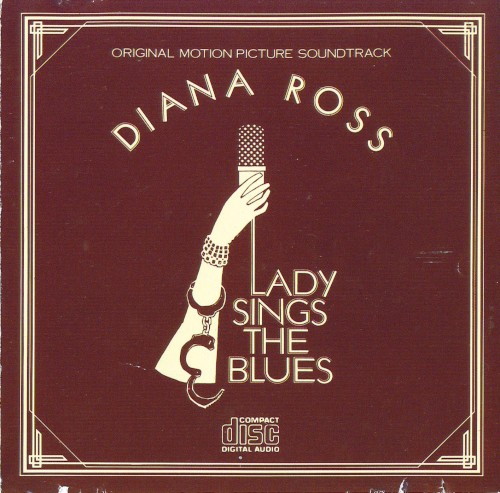
Album Information Section
Album Title: Lady Sings the Blues: Original Motion Picture Soundtrack
Artist: Diana Ross
Original Release Date: October 1972
Label: Motown
Genres: Jazz, Soundtrack
Track Listing
- 1. The Arrest (0:15)
- 2. Lady Sings the Blues (1:03)
- 3. Baltimore Brothel (0:26)
- 4. Billie Sneaks Into Dean & Dean’s / Swingin’ Uptown (0:53)
- 5. T’ain’t Nobody’s Bizness If I Do (1:06)
- 6. Big Ben / C. C. Rider (2:32)
- 7. All of Me (2:20)
- 8. The Man I Love (2:27)
- 9. Them There Eyes (1:05)
- 10. Gardenias From Louis (2:04)
- 11. Cafe Manhattan / Had You Been Around / Love Theme (3:33)
- 12. Any Happy Home (0:37)
- 13. I Cried for You (Now It’s Your Turn to Cry Over Me) (0:38)
- 14. Billie & Harry / Don’t Explain (2:12)
- 15. Mean to Me (1:19)
- 16. Fine and Mellow (0:46)
- 17. What a Little Moonlight Can Do (2:10)
- 18. Louis Visits Billie on Tour / Love Theme (3:48)
- 19. Cafe Manhattan Party (1:38)
- 20. Persuasion / T’ain’t Nobodys Bizness If I Do (3:06)
- 21. Agent’s Office (1:09)
- 22. Love Is Here to Stay (2:00)
- 23. Fine and Mellow (2:56)
- 24. Lover Man (Oh, Where Can You Be?) (3:22)
- 25. You’ve Changed (2:34)
- 26. Gimme a Pigfoot (and a Bottle of Beer) (2:06)
- 27. Good Morning Heartache (2:21)
- 28. All of Me (2:05)
- 29. Love Theme (2:53)
- 30. My Man (Mon homme) (3:26)
- 31. Don’t Explain (2:11)
- 32. I Cried for You (Now It’s Your Turn to Cry Over Me) (2:13)
- 33. Strange Fruit (3:35)
- 34. God Bless the Child (2:43)
- 35. Closing Theme (1:08)
Recording Information
The soundtrack for “Lady Sings the Blues” was recorded at the famed Motown studios located in Detroit, Michigan. The recording sessions took place primarily in 1972, coinciding with the film’s production. The album was produced by the legendary Berry Gordy, the founder of Motown, along with the skilled engineering team that was integral to the Motown sound.
Notably, the recording techniques employed for this album included the use of multi-track recording, which allowed for the layering of Ross’s vocals over rich instrumental arrangements. The sessions captured the raw emotion and depth of Billie Holiday’s music, with a focus on authenticity that resonated with both the film’s narrative and the historical context of the songs.
One interesting production note is that Diana Ross performed all the songs live, capturing the essence of Billie Holiday’s performances. The team ensured that the emotional weight of the lyrics was preserved, inviting the listener into Holiday’s tumultuous life through Ross’s powerful delivery.
Band Context
At the time of the album’s release, Diana Ross was at a pivotal point in her career. Having transitioned from her successful role as the lead singer of The Supremes, she was becoming a prominent solo artist. “Lady Sings the Blues” was not only a soundtrack but also a vehicle for Ross to showcase her versatility as a performer. The role of Billie Holiday in the film was a significant step for Ross, allowing her to delve into dramatic acting while also paying homage to one of jazz music’s greatest legends.
During this period, Ross was experiencing a surge in popularity, with previous hit singles and albums solidifying her status as a music icon. The film’s release was accompanied by critical acclaim, and the soundtrack became a commercial success, further establishing Ross’s influence in the music industry.
Significant events surrounding this period included the growing movement for racial equality, which paralleled the themes of many songs included in the soundtrack. Ross’s portrayal of Holiday brought attention to the struggles faced by Black artists, deepening the cultural impact of the film and the album.
Track Commentary
The “Lady Sings the Blues” soundtrack features a collection of 35 tracks that span a range of styles, predominantly jazz. The album opens with brief yet poignant interludes that set the stage for the emotional journey through Holiday’s life and music. Tracks like “Strange Fruit,” a haunting protest song about racism, and “God Bless the Child,” a classic that speaks to personal struggle and resilience, highlight the depth of Holiday’s artistry.
Standout songs include “My Man” and “Lover Man,” both of which showcase Ross’s ability to convey deep emotion and connect with the listener. The musical arrangements blend orchestral elements with jazz instrumentation, providing a rich backdrop for Ross’s vocals. Critics praised her ability to capture the essence of Holiday’s spirit, leading to a lasting legacy for both the album and the film.
The album was well-received, and its critical acclaim has endured over the years. It is often referenced in discussions about the intersection of music and film, particularly in how it brought historical context to a contemporary audience through powerful storytelling and performance. The soundtrack remains a significant contribution to both Diana Ross’s discography and the broader landscape of American music.